Hard Stop at 10 Years: NSW Supreme Court Confirms 10-Year Cut‑Off for Contribution Claims
-
Insight Article 2026年6月30日 2026年6月30日
-
亚太地区
-
Regulatory movement
Fortius Broadway No 1 Pty Ltd v Watpac (NSW) Pty Ltd (No 1) [2026] NSWSC 710
In a significant decision for the construction industry, the Supreme Court of New South Wales clarified two critical issues concerning the operation of the statutory 10 year “long‑stop” limitation period under section 6.20 of the Environmental Planning and Assessment Act 1979 (NSW) (EPA Act).
In a judgment handed down on 25 June 2026, her Honour, Rees J determined that:
(a) the long-stop applies to claims for contribution under the Law Reform (Miscellaneous Provisions) Act 1946 (NSW) (LRMP Act); and
(b) section 74 of the Limitation Act 1969 (NSW) (Limitation Act) does not extend the operation of the long-stop.1
The decision has immediate significance for risk allocation, litigation strategy, and insurer exposure in multi party construction disputes.
Background
The proceedings arise out of alleged defects in the multi-award winning “One Central Park” mixed-use development in Chippendale, NSW - an architecturally distinctive project featuring vertical hanging gardens and a cantilevered heliostat. The defects came into particular focus following an incident whereby a planter box fell from the building, fortunately without causing injury.
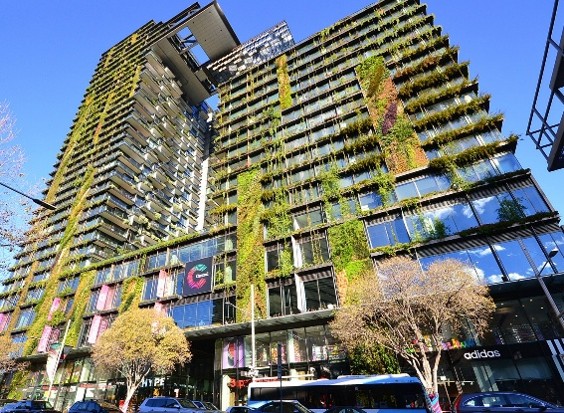
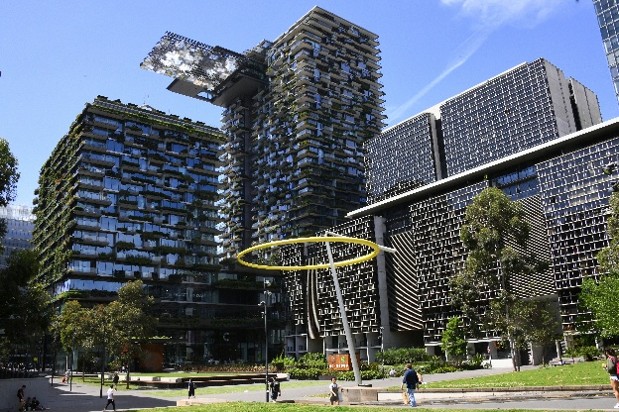
The plaintiff, being the retail lot owner, commenced proceedings against numerous parties involved in the design and construction of the development, including the builder, designers, consultants and the certifier.
Shortly before the expiry of the 10‑year long‑stop the plaintiff sought leave to amend its pleadings to:
(a) add new defects, and
(b) introduce a new claim against the certifier to allege breach of the statutory duty of care under section 37 of the Design and Building Practitioners Act 2020 (NSW) (DBP Act).
The proposed new claim had critical consequences: following the High Court’s decision in Pafburn Pty Ltd v The Owners – Strata Plan No 84674 [2024] HCA 49, DBP Act claims are not subject to proportionate liability, meaning defendants must pursue contribution claims against joint tortfeasors.
The certifier opposed the grant of leave on the basis that it would suffer prejudice. In particular, due to the operation of the long‑stop, it had insufficient time to consider bringing claims for contribution against other parties, and was now time barred. The certifier further argued that section 74 of the Limitation Act did not operate to extend time for bringing contribution claims against existing defendants who it would have cross-claimed against.
Application of the “long‑stop” to contribution claims
The Court held that section 6.20 of the EPA Act applies to claims for contribution against “those said to be responsible for ‘building work’” (being the design or inspection of building work and the issue of a complying development certificate or a certificate under this Part in respect of building work, as defined in section 6.19 of the EPA Act).2
In reaching that conclusion, her Honour considered the breadth of section 6.20’s language.3 Section 6.20 applies to a “civil action for loss or damage arising out of or in connection with defective building work”. The definition of “civil action” expressly includes a “counter‑claim”, which the Court held encompasses cross‑claims between defendants.4 Given that contribution claims are a common form of cross‑claim in construction litigation, they squarely fall within that language.
The Court noted that a contribution claim is, by its nature, in respect of the same loss or damage suffered by the plaintiff. Under section 5 of the LRMP Act, contribution is only available where multiple parties are liable for the “same damage”. Thus, a contribution claim directly engages the same harm or injury that forms the basis of the plaintiff’s action.5
Alternatively, her Honour observed that the defendant’s exposure to liability for the plaintiff’s claim constitutes pure economic loss caused by the defective building work. On that view, the defendant’s contribution claim is itself a claim for “loss or damage arising out of or in connection with” the defective work.6
Further, the legislative context supported that interpretation. The predecessor to section 6.20 (s 109ZK) operated alongside a statutory regime dealing expressly with contribution and apportionment, indicating that “building actions” were intended to encompass the full spectrum of litigation arising out of defective building work, including cross‑claims. The Court found that this context remained relevant notwithstanding statutory amendment.7
Finally, the Court placed significance on the long stop’s purpose. It addressed indeterminate liability for latent defects (since limitation periods in negligence run only from when a physical defect or resulting damage become apparent) and provides finality for those involved in building work.8 Allowing contribution claims to be brought outside the 10 year period would undermine that purpose by exposing defendants to potential indirect claims long after the expiry of a primary limitation period.9 For that reason, the Court emphasised that applying the long stop to contribution claims is necessary to give effect to the statute’s objective
Interaction with the Limitation Act
The Court rejected that section 74 of the Limitation Act could extend contribution claims beyond the 10-year long stop. Section 74 provides that certain cross claims are deemed brought once the relevant party becomes a party to the proceedings; however, Rees J emphasised this provision operates only “for the purposes of [the Limitation Act]” and does not affect limitation periods imposed by other statutes.10
Section 6.20(4) of the EPA Act states the long stop operates “despite any other Act or law.” The Court found this provision decisive, establishing the long stop prevails over any inconsistent law.11
Extending contribution claims via section 74 would transform the 10 year limit into a longer period (potentially up to 14 years), which would be inconsistent with the statutory text and purpose.12
Refusal of leave to amend
Having determined that the long stop applied to contribution claims, the Court turned to whether the plaintiff should be allowed to amend the pleading. The key question was whether this late amendment would cause prejudice to the certifier by depriving it of any opportunity to bring contribution claims. The Court concluded that it would.
The certifier had potential cross claims against other defendants which were “viable and realistic,” given the plaintiff’s own pleading that those parties also bore responsibility for the defects. Because of the plaintiff’s delay in introducing the DBP Act claim, those cross claims were now time barred. The resulting prejudice was “obvious and significant.”13
Her Honour rejected the suggestion that the certifier should have filed protective cross claims within the limited time available. The certifier had only a matter of hours between a temporary grant of leave and the expiry of the limitation period. Preparing cross claims (particularly where insurers are involved) requires instructions, advice, and approval, and cannot reasonably be done overnight.14
The Court was troubled that the plaintiff had waited eight months before seeking to amend the pleading and had not disclosed that delay when seeking urgent relief.15 In contrast, the Court noted that any prejudice to the plaintiff from refusing leave was relatively limited, as it retained other causes of action, including negligence and Australian Consumer Law claims.16
The Court refused leave to amend.
Implications for industry participants and insurers
The decision has immediate implications for construction professionals and those who insure them. It confirms that the 10 year long stop is a true and inflexible cut off for all forms of litigation arising from defective building work, including contribution claims. Once the 10 year long stop period expires, those claims cannot be revived or extended.
The case underscores the importance of early and proactive claims management. Participants in construction projects must identify potential contribution claims well before the end of the long stop and take steps to preserve those rights. Failure to do so may leave defendants bearing a disproportionate share (or even all) of liability, particularly in DBP Act claims, which are not subject to proportionate liability
From an insurance perspective, the judgment highlights that the loss of contribution rights can significantly affect defendants’ exposure, reserves and settlement strategy. As the Court recognised, the ability to pursue contribution directly affects how a defendant and its insurer assess and manage risk in the litigation.17
Key Takeaways:
- The long‑stop is an absolute bar on all claims (including claims for contribution).
- Limitation Act provisions (e.g., section 74) cannot revive contribution claims after 10 years.
- Late amendments may be refused if they would cause prejudice by foreclosing a party’s right of contribution.
Note: Clyde & Co act for the structural engineers in these proceedings; those engineers supported the certifier’s position, but the plaintiff sought leave to discontinue the claim against them shortly before the hearing
[1] For the purposes of claims by way of (amongst other things) cross-claim / counterclaim, section 74(1) of the Limitation Act stops time running on limitation periods against other parties on the day on which they were made a party to the principal action: LIMITATION ACT 1969 - SECT 74 Set off etc
[2] [112]
[3] [100]
[4] [104]
[5] [107]
[6] [108]
[7] [87]–[88], [98]
[8] [83]–[84], [102]
[9] [109]
[10] [77]
[11] [110]
[12] [111]
[13] [115]-[116]
[14] [117]-[118]
[15] [114]
[16] [120]
[17] [50]
结束