Legal Considerations for Rare Earth Projects in Africa
-
Insight Article 05 August 2026 05 August 2026
-
Africa
-
Regulatory movement
-
Energy & Natural Resources
Global demand for rare earth elements (REEs) is accelerating rapidly, driven by the energy transition, electric vehicles, wind power, defence technologies and advanced electronics.
Introduction
Magnet materials such as neodymium and praseodymium are particularly critical. Yet global supply chains remain overwhelmingly concentrated in China, which continues to dominate not only mining but, more critically, processing and separation.
Against this backdrop, Africa is emerging as a strategically important source of diversified rare earth supply. While no African REE project has yet reached large‑scale production, a wave of developments across Southern and East Africa is progressing from exploration into financing and construction. The success of these projects, however, will depend on the ability to structure them within robust legal frameworks capable of withstanding political, ESG and financing scrutiny.
The Emerging African REE Pipeline
Africa hosts several dozen known rare earth deposits, with several now reaching advanced stages of development. By the late 2020s, up to eight African projects could be operational across jurisdictions including South Africa, Tanzania, Malawi, Angola, Namibia and Uganda, raising Africa’s contribution to global REE supply to an estimated 7–10%.
Notable examples are captured in Figure 1 below and include:
- South Africa’s Steenkampskraal, Phalaborwa and Zandkopsdrift projects, which benefit from established mining laws and legacy infrastructure.
- Tanzania’s Ngualla project, one of the highest‑grade undeveloped neodymium‑praseodymium deposits globally.
- Malawi’s Songwe Hill and Kangankunde projects, both attracting strategic Western financiers.
- Angola’s Longonjo project, closely aligned with the Lobito Corridor logistics infrastructure.
- Ionic clay and heavy rare earth projects in Uganda and Namibia, presenting differentiated supply opportunities.
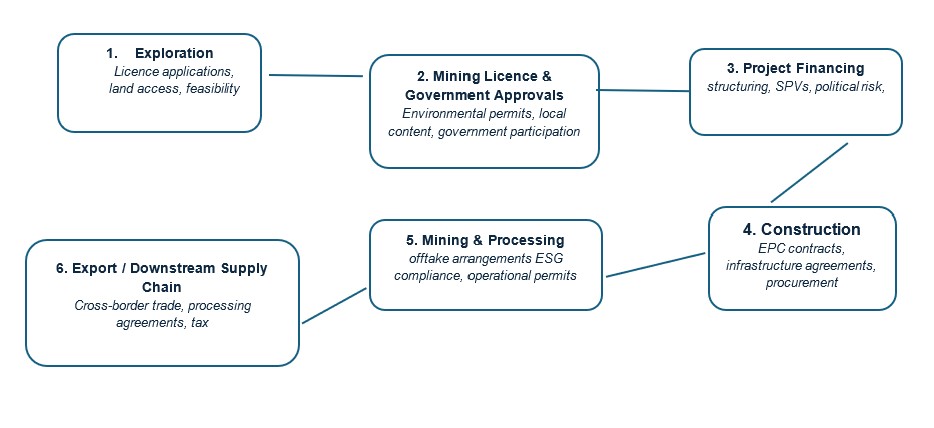
While technically diverse, these projects share common legal challenges that must be addressed early to achieve bankability. As shown in Figure 2 below, REE projects typically progress through a series of interlinked stages: exploration, licensing and government approvals, financing, construction, mining and processing, and ultimately export or downstream supply chain integration. Each of these stages gives rise to distinct legal considerations, which this article will explore in turn.
Figure 1: New REE Projects in Africa
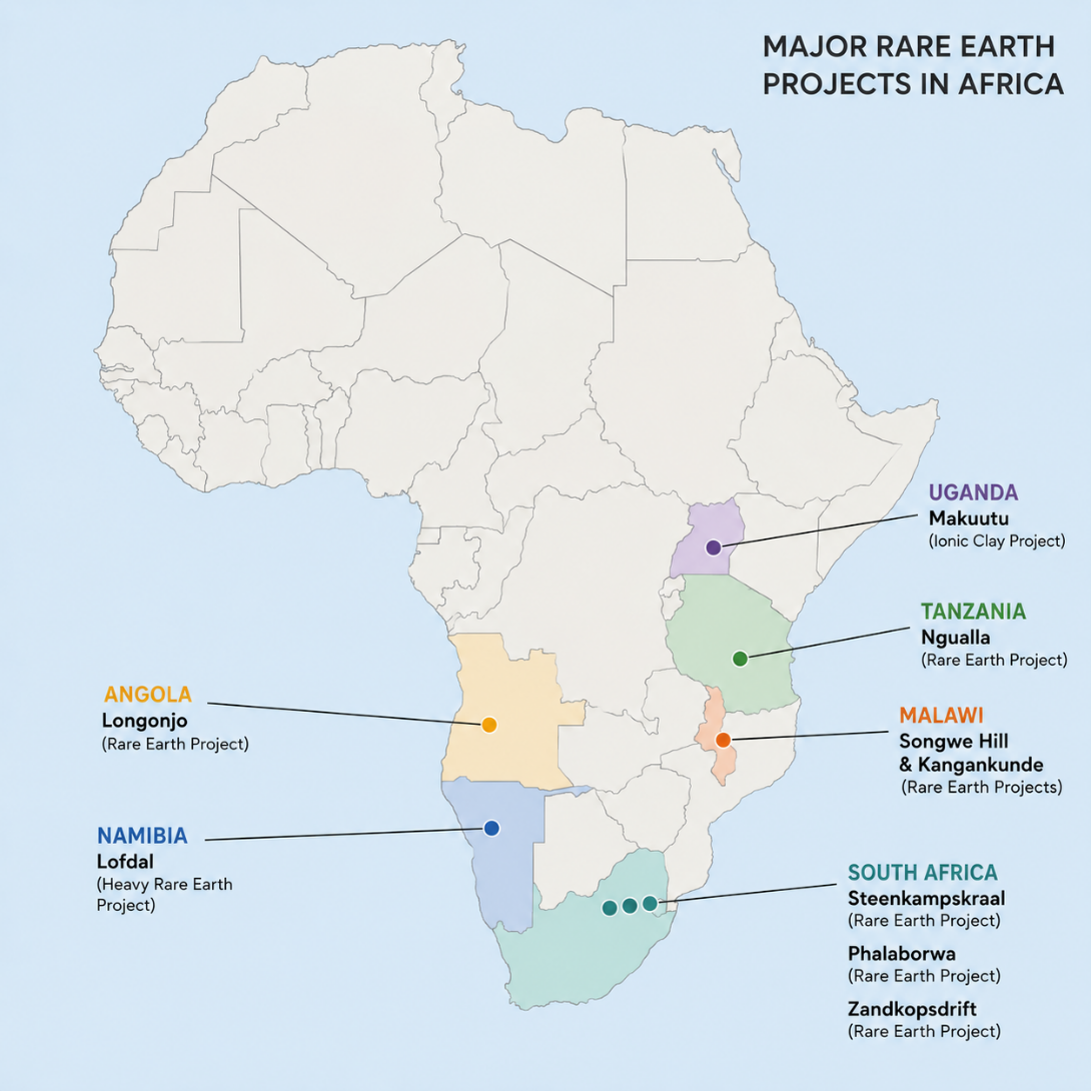
Figure 2: Project Stage and Key Legal / Commercial considerations
Exploration – Securing Mineral Rights and Project Foundations
The exploration phase centres on securing the rights needed to identify and assess a viable resource. Developers must obtain exploration licences, which grant the legal basis to conduct geological surveys, drilling and related activities. Early-stage legal focus is therefore on the validity, scope and exclusivity of these rights.
A key priority at this stage is land access. Even where exploration rights are granted, developers must ensure they have the necessary agreements in place with landowners or communities. This may involve access agreements, compensation arrangements or compliance with customary land tenure systems, depending on the jurisdiction.
Legal work at this stage often includes:
- Licence applications and renewals, ensuring compliance with regulatory requirements and retention of exploration rights.
- Land access and surface rights, including agreements with landowners and management of competing land uses.
- Data ownership and confidentiality, particularly in relation to geological information and feasibility studies.
- Early-stage feasibility work, which underpins future applications for mining licences and project financing.
While exploration carries relatively high geological risk, establishing clear and enforceable rights at this stage is essential. Weaknesses in title, land access or licence compliance can create significant legal uncertainty later in the project lifecycle.
Mining Licences and Government Approval
At the core of any REE project is the granting of secure mining rights, supported by a broader framework of government approvals. Developers typically progress from exploration licences to full mining licences, supported by feasibility studies and approved environmental and social impact assessments (ESIAs). These approvals form a central part of the project’s legal and commercial foundation.
Rare earth projects attract heightened environmental scrutiny due to radioactive by-products, tailings management and water usage. ESIAs are therefore critical legal instruments underpinning a project’s social licence to operate.
Best practice projects align host country requirements with international ESG standards such as the Equator Principles, IFC Performance Standards and OECD guidelines. This typically includes:
- Environmental permitting, including ESIA approval and ongoing compliance obligations.
- Community consultation and resettlement frameworks, ensuring proper stakeholder engagement.
- Tailings and waste management arrangements, particularly for radioactive by-products.
- Decommissioning and rehabilitation security, to ensure closure obligations are funded.
Mining licences also sit within a broader framework of local content requirements and state participation. Many jurisdictions require commitments on local employment and procurement, and may grant governments equity interests or other rights in the project.
Given the long-term nature of REE developments, developers must also address regulatory and policy risk at the licensing stage. This may include stabilisation provisions and structured government support arrangements, which help provide legal and fiscal certainty over the life of the project.
Failure to secure and properly structure these licences and approvals can materially affect financing, insurance and overall project bankability.
Structuring Projects for Financing
Most African REE developments require significant upfront capital long before revenue is generated. Significant capital is needed to fund feasibility studies, mine construction, processing facilities and supporting infrastructure. As a result, these projects are typically structured through special purpose vehicles (SPVs), which are stand‑alone project companies created specifically to own and develop the mine.
SPVs are designed to support limited‑recourse project financing, meaning lenders rely primarily on the project’s future cash flows and assets for repayment, rather than the balance sheet of the project sponsor. For this structure to work, the legal framework surrounding the project must be robust, transparent and enforceable.
Key legal components of bankable structures include:
- Enforceable offtake agreements, whereby a mining project agrees to sell its future production to a credible buyer.
- Transparent ownership and governance arrangements, allowing lenders to clearly understand who controls the project, how decisions are made, and how potential conflicts of interest are managed, particularly where governments retain equity or special rights.
- Comprehensive security packages, typically covering shares in the project company, key bank accounts, physical assets and, where legally permitted, mining rights or associated contractual interests.
- Political and policy risk mitigation, including stabilisation provisions, political risk insurance, and (where available) investment treaty protections and access to international arbitration.
- Government support and interface arrangements, particularly where projects depend on state-backed infrastructure, utilities or concessions.
The increasing involvement of development finance institutions (DFIs), including US‑ and EU‑backed agencies, has sharpened the focus on legal transparency, anti‑corruption controls, sanctions compliance and environmental and social standards. While this can add complexity, it also strengthens project credibility and can help attract private capital.
Construction and Infrastructure
The construction phase is a critical bridge between project financing and operational delivery, and is often where legal and execution risks are most acute. REE developments typically involve mine construction, processing facilities and supporting infrastructure such as power, water and transport.
From a legal perspective, project delivery is usually structured through EPC contracts or a combination of engineering, procurement and construction arrangements. Lenders will focus on whether construction risk is appropriately allocated and mitigated. Key considerations include:
- Risk allocation and contract structure, including whether EPC arrangements are fixed‑price and date‑certain, and whether responsibility for cost overruns and performance failures are clearly assigned.
- Performance security, such as parent company guarantees, performance bonds and liquidated damages for delay or underperformance.
- Interface risk, particularly where multiple contractors are involved across mine and infrastructure components.
- Infrastructure arrangements, including agreements for power supply, water access and transport corridors, often requiring government support or concession structures.
- Regulatory and permitting alignment, ensuring construction activities are fully consistent with environmental approvals and licence conditions.
Given that many REE projects are located in remote or underdeveloped areas, infrastructure constraints can materially affect timelines and costs. As a result, careful legal structuring during this phase is essential to ensure that construction risk is contained and that the project can transition into operations without undermining its bankability.
Mining and Processing
Once construction is complete, projects move into the mining and processing phase, where the focus shifts to day‑to‑day operations. This stage depends on continued compliance with ESG obligations and maintaining all required operational permits and licences.
At the same time, establishing reliable revenue streams becomes critical. Long‑term offtake (buyer) arrangements are usually put in place at or before this point, often as a condition of project financing. These agreements need to strike a balance between lender requirements and commercial flexibility.
Key legal considerations include:
- ESG compliance and regulatory oversight, including ongoing compliance with ESG obligations established at the approvals stage and adherence to ESIA commitments and international standards.
- Operational permitting, ensuring all licences remain valid, conditions are complied with, and expansions or modifications are properly authorised.
- Offtake arrangements, including pricing mechanisms, volume commitments, creditworthiness of buyers and alignment with lender requirements.
- Contractual performance and risk allocation, particularly where processing performance, recovery rates or product specifications affect revenue outcomes.
Failure to properly integrate ESG, operational and commercial obligations at this stage can have a huge impact on financing covenants, insurance coverage and long-term project viability.
Export / Downstream Supply Chain
Unlike bulk commodities, REEs derive most of their value downstream. Separation and refining remain highly specialised and are still heavily concentrated in China. As a result, many African projects currently depend on exporting concentrate for overseas processing.
Projects therefore rely on long‑term buyers or special processing arrangements spread across multiple jurisdictions. These structures raise complex legal issues, including:
- Governing law and dispute resolution, particularly where mining, processing and purchasing occur in different countries and contracts must be enforceable across borders.
- Export controls and strategic minerals regulation, as rare earths are increasingly treated as sensitive or strategic materials subject to licensing or restrictions.
- Transfer pricing and tax structuring, given that value is often realised downstream and must be allocated appropriately between related entities and jurisdictions.
Political risk protection for cross‑border processing, including risks linked to export bans, changes in trade policy or interference with logistical arrangements
Conclusion
Rare earth projects in Africa present a significant opportunity to diversify global supply at a time of growing demand. However, these projects are complex and capital-intensive, and their success depends on far more than resource quality alone.
As this article has shown, REE developments must navigate a series of interlinked legal and commercial stages, from exploration and licensing through to financing, construction, operations and downstream integration. Weaknesses at any point in the project lifecycle can undermine overall bankability.
For developers, investors and lenders, the key to success lies in early and coordinated legal structuring. This includes securing robust mineral rights, incorporating robust ESG frameworks, allocating risk effectively through project contracts, and ensuring that export arrangements are aligned with financing requirements.
As the number of African REE projects increases, robust legal frameworks will be a key factor in determining which projects ultimately succeed.
End