Legal aspects of data centres in Africa
-
Bulletin 13 avril 2026 13 avril 2026
-
Afrique
-
Technologie et évolution de l’IA
-
Technologie, externalisation et données
Africa is experiencing a surge in data centre development. As of 2025, the continent hosts 211 operational data centres, with nearly half located in South Africa, Kenya, Nigeria and Egypt. An additional 56 new facilities are expected to be launched by the end of 2026. This growth is driven by increasing internet penetration, cloud adoption and demand for localized data storage.
Despite this progress, Africa still holds less than 1% of global data capacity, highlighting both the challenge and the immense opportunity for infrastructure investment.
Because of this novelty, there is not yet a wide body of statute-law specifically dedicated to “data-centre regulation” in most jurisdictions. Therefore, rather than a discrete “Data Centre Act”, regulatory oversight is often via existing investment, telecoms, land-use, environmental and data-protection regimes.
1. What is a data centre?
There isn’t a strict legal definition of a “data centre” in an African context. Instead, data centres are usually described by what they do i.e. a dedicated facility built to house computing infrastructure (including servers, storage arrays, network routing and cooling / power systems) and used for hosting, managing and running digital services and applications.
2. Why the demand for data centres in Africa
Africa’s data centre demand is booming for several reasons:
- Digital Shift: Governments and businesses are rapidly transitioning to the online world. As a result, there are more apps, more data and an increased need for local storage.
- Internet Growth: Millions more people are going online via mobile, leading to an increase in the demand for digital services and supporting infrastructure.
- Data Laws: Many countries are introducing requirements for local data storage, which is driving interest in domestic data-centre facilities.
- Cloud & AI: Global technology providers are expanding into African markets and they need fast and reliable data centres close to users.
- Connectivity Boost: New undersea cables are linking Africa to the world, making it a prime location for global data flow.
- Jobs & Investment: Governments view data centres as catalysts for economic development and technology-related employment.
Taken together, these factors position data-centre development as a significant growth opportunity across Africa. However, success depends not just on build and operation, but on navigating legal, real-estate and regulatory frameworks as outlined below.
3. Key legal issues for data-centre development
The following legal issues should be considered by investors and developers when engaging in a data-centre project in Africa:
3.1 Real-estate / land rights
Selecting a suitable site for a data centre requires more than just finding available land — it demands a thorough understanding of local land ownership, zoning, and infrastructure conditions. Developers must confirm whether the site is freehold, leasehold, or state-owned, and ensure compliance with any foreign ownership restrictions. Please note that freehold land is quite a rare concept in parts of Africa. The Government will invariably retain control and ownership of land while providing long leases.
Local zoning and land-use rules determine whether data centre operations, heavy power use and industrial infrastructure are permitted. It is also important to secure rights for future expansion, utilities, and fibre or power connections. Proximity to a submarine cable or fibre landing station can be a major advantage, while reliable power, cooling, water and telecoms infrastructure are essential to long-term operations. Engaging early with local authorities and communities helps to navigate permitting processes and address environmental or planning concerns from the outset.
3.2 Infrastructure & uitility rights
Power is a key consideration. In many ways, a data centre project should be a considered akin to a large power project in Africa from a legal perspective.
Data centres depend on large amounts of power, cooling, and high-speed connectivity which makes infrastructure and utility planning essential from the outset. Developers must secure a reliable, long-term power supply, often supported by backup generators or on-site power generation whilst also ensuring compliance with local energy regulations rules. African Governments will generally control power production and distribution. Even if a private sector party has developed an independent power project (IPP), the developers ‘offtaker’ will likely be a Government utility. Therefore, the Government will be a key party within any African data centre project or transaction. This necessitates an understanding of the relevant ‘electricity Act’ or equivalent in that jurisdiction.
As cooling systems can consume significant water, it is important to obtain the right water-use permits and meet environmental and conservation standards. Liaison with the relevant environmental agency may also be required. An understanding of environmental laws and those particularly related to water use will be vital.
3.3 Telecommunications & connectivity regulation
Data centres depend heavily on strong internet and telecom connections. Before investing, it is important to check local telecom rules—such as what licences are needed, whether there are limits on foreign ownership, and who can access land-based or undersea fibre cables. Choosing a site close to major fibre routes or submarine cable landing points helps ensure fast and reliable connectivity. It is also crucial to plan for backup connections, negotiate agreements with existing network providers and consider models that allow multiple carriers to operate fairly in the same facility.
If the data centre will let multiple telecom companies connect there, it must be ensured that there are proper multiplicity of licences and contracts so that all customers can reliably and legally use those networks. The telecoms legal framework which underpins connectivity to these ‘landing points’ will be important. The licencing regime associated with it will be part of the data centre project.
3.4 Data-protection, privacy & localisation
Data centres store data, so they must follow local data-protection rules even though they don’t control the data themselves. Investors should make sure the facility and operator comply with local data protection laws. Some countries require data to be stored locally, and there may be rules about sending data across borders. It is also important to seek legal advice and check whether registration or certification is needed for handling certain types of data.
African countries are undergoing a drive for data protection legislation. Once a novel concept in Africa, confidentiality and data protection is now at the forefront of legislative change. Each country is enacting a ‘Data Protection Act’, loosely based on western standard forms. A detailed understanding of this legislation will be critical to efficiently undertaking a data centre project.
3.5 Environmental, social & governance (ESG) and sustainability obligations
Data centres use a lot of electricity, water, and energy, so environmental and sustainability rules are important. Even though specific laws for data centres are rare, as mentioned above, operators must follow general environmental rules on air quality, water use, and waste management. Investors should also consider going beyond legal compliance, as meeting sustainability standards can help secure financing linked to ESG goals and build trust with local communities. Planning for energy efficiency, renewable energy and responsible water use will reduce costs and risks over time.
3.6 Contracts, operational & exit structure
When investing in a data centre, it’s important to structure the project carefully from construction to operation and eventual exit. This includes contracts for building the facility (EPC) and running it day-to-day (O&M) - see figure 1 below for how these parties relate to the project. If the land is not owned under a freehold title, the lease or occupancy arrangements must be clear and foreign investors may need special rights to operate. Service agreements should define what tenants can expect in terms of reliability and performance. It is also vital to plan for how ownership or management can be transferred in the future, since data centres are long-term investments. Finally, it is important to consider risks from regulatory changes, natural disasters, or unexpected events and seek legal advice to ensure the contracts cover these possibilities.
3.7 Foreign-investor / local-partner / ownership structuring
Many African countries limit foreign ownership of land and strategic sectors like telecoms or utilities and may require local partners or shareholding in infrastructure projects. Investors should review national and foreign investment laws and check for sector-specific restrictions in telecoms and Information and Communications Technology (ICT). It is essential to understand local rules on land ownership as this helps to avoid legal problems and ensures the project can move forward smoothly.
4. Typical project structure
The typical parties to a data centre project are displayed at Figure 1 below:
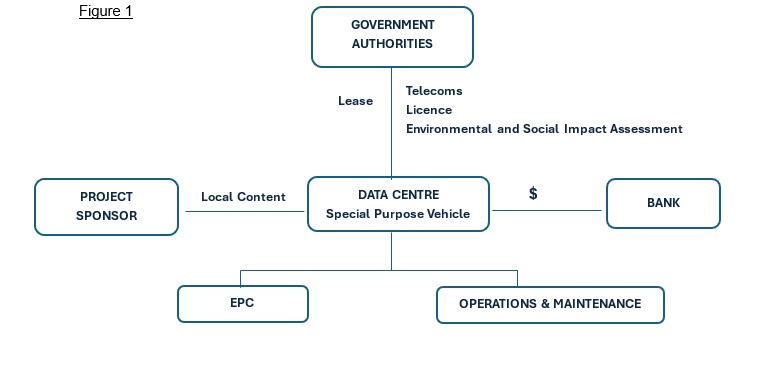
Figure 1 shows the main stakeholders, structured around a special purpose vehicle (SPV), and how the money, licences and responsibilities flow between these parties. The potential power utility or ‘offtaker’ is not included at Figure 1, however please assume that as this will likely be a Government utility in the African context then it would be classified as ‘Government Authorities’ above. A private sector, captive power solution should also be considered viable.
The following provides an overview of the role played by each party:
- Government Authorities are responsible for granting leases, telecom licences, and approvals like environmental and social impact assessments. They are a regulatory hub for the project.
- Project Sponsor will provide the equity funding, expertise, and shareholding. They effectively drive and develop the project from inception.
- Data Centre SPV is the central entity that holds the project assets and manages the financing, construction, and operations. It receives funds from the bank and oversees EPC and O&M contractors.
- Bank provides financing to the SPV and thereby supports the construction and operation costs.
- EPC (Engineering, Procurement, and Construction) is responsible for building the data centre.
- Operations & Maintenance (O&M) will handle the ongoing running, maintenance, and service continuity of the data centre.
5. Bankability considerations for data centre projects
Prior to financing a data centre in Africa, lenders will need to have confidence that the project can run reliably over the long term. The most relevant factors are likely to be the following:
a) Land security
Lenders will need to be confident that the borrower has secure, long-term rights to occupy and to use the site for the full term of the loan. Any uncertainty about title, historic village land conversion or renewal terms can undermine bankability, so clear documentation and predictable lease arrangements are important. Lenders will likely undertake considerable due diligence on land and whether it is appropriately ‘held’.
b) Power
A reliable electricity supply is core to revenue stability. Lenders will normally require evidence of an agreed grid connection, adequate backup generation and, where relevant, a long-term power purchase arrangement or credible on-site generation. These measures reduce the risk of outages that could affect the borrower's ability to repay the loans.
c) Connectivity
Redundancy in fibre infrastructure is another key concern. Lenders will usually expect access to at least two independent fibre routes or carriers, supported by enforceable rights-of-way for all planned works. For facilities aiming to be carrier-neutral, lenders will want assurance that the operator can lawfully provide open access to multiple providers.
d) Environmental and permitting risk
Lenders should be content that all environmental and social impact assessments are complete and that water-use, construction and telecom licences are either in place or obtainable without material delay. Alignment with recognised ESG standards will help demonstrate long-term compliance and can improve financing outcomes.
e) Commercial contracts
EPC and O&M agreements should match lender requirements on performance, testing procedures and continuity of service. Tenant contracts that guarantee reliable service and steady income help ensure there’s enough cash flow to pay back loans. Projects that address these commercial points early tend to present a more bankable profile. Lenders may wish to have a lenders direct agreement for projects with significant value and risk
The above highlights the importance of early engagement with lenders and advisors to address key bankability factors. Securing land rights, power and connectivity arrangements, environmental compliance, and robust commercial contracts upfront can significantly reduce risk and improve financing prospects. Stakeholders will benefit from a more stable, efficient and smooth-running project if these considerations are made early.
6. Case study: Tanzania – real-estate rights & investment routes
Using one African country as a case study, we examine Tanzania below in order to put into practice the data centre legal considerations discussed above.
6.1 Land ownership framework
In Tanzania:
- Under the Land Act [Cap.113 R.E. 2023] (the Land Act), all land is vested in the President as trustee on behalf of Tanzanians. There is effectively no ‘freehold land’, just long leases, granted by the Government.
- Land is classified into general land, village land and reserved land. Foreign companies cannot acquire freehold ownership of land unless special approvals exist.
- For non-citizens, the regime allows leasehold or derivative rights for approved investment projects.
6.2 Options for foreign investors
For a foreign company (or foreign-controlled entity) wanting to build a data centre in Tanzania, the permitted routes typically are:
- Long leasehold: The foreign entity leases the land from a Tanzanian entity holding a right of occupancy (general land) for a term (often up to 99 years) under the Land Act regime.
- Derivative right via the Tanzania Investment and Special Economic Zones Authority (TISEZA): The foreign investor may acquire the land then surrenders the title to the Commissioner for Lands which in turn issues a land title toto the TISEZA in order to receive a derivative right of occupancy. This route allows the foreign investor to “buy” the land (effectively through the Tanzania agent) and then lease it back as a derivative right, thereby complying with the prohibition on outright foreign holding of a granted right of occupancy (the highest form of land title in Tanzania).
- Note that if the land is village land (rather than general land), additional conversion is required which may delay the project.
6.3 Broader comparative African context
Tanzania’s land-ownership and foreign-investor regime is not unique; similar hurdles exist in many African jurisdictions:
- Kenya: Foreigners are prohibited from owning freehold land. They may acquire leasehold interests for up to 99 years. Agricultural land ownership by foreigners is highly restricted, though leasing for investment purposes is possible.
- Uganda: Foreign investors can only access land through leasehold arrangements. Freehold and “Mailo Land” (a unique tenure system) are generally reserved for citizens. Leasehold terms typically extend up to 99 years.
- Ethiopia, Zimbabwe and Mozambique: Land ownership for foreigners is significantly restricted, therefore long-term leases will be required.
- However, some countries such as Rwanda have more liberal regimes whereby foreigners can own land under the same conditions as citizens.
The above highlights the need for careful consideration and expert real estate legal advice when considering a new data centre project.
7. Specific regulatory observation: Lack of dedicated legislation
As mentioned above, although data centres are rapidly increasing in importance, in most African jurisdictions there is no specific legislation that is solely dedicated to “data-centre regulation” (for example, a “Data Centre Act” that lays out all duties of operators). Instead:
- Data centres fall under existing frameworks: telecoms/ICT licensing regimes, investment/infrastructure licensing, land-use and zoning laws, environmental law and data-protection regulation.
- The development of specific regulation is beginning: for example in Mozambique, a draft regulation for data-centres and cloud-computing services is under public consultation; this regulation would provide for registration, licensing, infrastructure standards and sanctions.
- As a result of this this regulatory gap, licensing regimes and investment-approval processes (via investment-centres, land authorities, telecoms regulators) become the de facto regulatory gateway. Developers need to negotiate appropriate licences/permits and ensure compliance with indirect regulation (environmental, data-protection, telecoms).
Thus, while data-centre projects can proceed under existing law, the absence of bespoke data-centre regulations means risk from regulatory change, ambiguity and shifting policy. Consequently, legal advice is essential.
8. Outlook for data-centre regulation in Africa
Regulation is expected to become more structured as demand increases. Governments are examining how data centres use power and water, manage data and connect to national fibre networks. This scrutiny is set to produce clearer guidance on energy efficiency, cooling methods and environmental reporting. Some countries including South Africa are also considering open-access requirements to ensure fair treatment of all carriers.
Regional bodies are also becoming increasingly influential. Smart Africa, for example, is a pan-African initiative focused on accelerating digital transformation and creating a Single Digital Market by 2030. It brings together more than 40 member states, regional organisations and private partners to harmonise ICT policies and promote shared standards for connectivity, cloud services, cybersecurity and data transfer. Its work is pushing countries toward more consistent approaches to data protection, localisation and infrastructure development. This rise in regional coordination is likely to shape how data centres operate by encouraging greater alignment on energy efficiency, open-access principles and cross-border data flows.
The rapid growth of AI and cloud services is set to speed up these regulatory shifts. As global providers expand into African markets, regulators may pursue stronger oversight of resilience, security and cross-border data management. Investors should expect more defined licensing processes, infrastructure standards and ESG requirements in the near future.
In this environment early legal guidance becomes essential. Investors will benefit from support in tracking policy developments, understanding local obligations and structuring contracts that offer protection as regulations evolve. Proactive legal advice can reduce risk and create a more predictable path for development and operations.
9. Key takeaways for developers and investors
- Land Matters First: Secure the right land tenure (freehold, leasehold, or state-owned) and confirm zoning allows for industrial-scale infrastructure and future expansion.
- Infrastructure is Critical: Plan early for power, water, and fibre connectivity — and secure all necessary permits and rights-of-way.
- Telecom Compliance: Check licensing requirements and foreign ownership limits for telecom infrastructure; proximity to fibre routes or submarine cables is a major asset.
- Data Rules Apply: Even though the owner of the facility is not the data controller, the facility must comply with local data protection, privacy, and data localisation laws.
- Think Green & ESG: Environmental permits, water use, and energy efficiency matter — sustainability can unlock financing and community trust.
- Contract Smartly: Structure EPC, O&M, and service agreements carefully; plan for operational risks and future ownership transitions.
- Know the Ownership Limits: Many countries require local partners or restrict foreign ownership in land, telecoms, or utilities. Seek legal advice and review the investment laws early.
Fin